
If you own a log home in the Wood River Valley and the chinking is cracking, pulling away, or letting drafts through, your first question is usually the same one: what is this going to cost? The honest answer is that chinking is priced by the linear foot, and the price per foot swings widely depending on the condition of the home. This guide explains how the pricing actually works, what pushes it up or down, and how to avoid paying for work your logs don't need.
How chinking is priced
Contractors price chinking by the linear foot of joint, not by the square foot of wall. A typical log wall carries a surprising amount of joint — a single 40-foot wall with eight courses of logs has over 300 linear feet of chinking on one side alone. That's why two homes of similar size can get very different quotes: the number that matters is how many feet of joint need work, and how wide those joints are.
Nationally, professionally applied chinking tends to run in the range of a few dollars per linear foot on the low end — simple, accessible, narrow joints — up to several times that for wide joints, tall walls, or heavy prep. In mountain resort areas like Sun Valley, Ketchum, and Hailey, expect the upper part of any national range: labor costs more here, and our freeze-thaw climate demands better prep and better materials.
The five factors that drive the price
1. How much has actually failed
This is the biggest one. A home that needs 60 feet of spot repair is a fundamentally different job from a full re-chink. Failed sections can often be cut out and re-sealed individually — if the surrounding chinking still has good adhesion and elasticity.
2. Joint width
Chinking joints on handcrafted log homes commonly run 2–5 inches wide. Wider joints take more material, more backer rod, and more time to tool cleanly. Material is a real portion of the cost — quality synthetic chinking isn't cheap, and it's not where you want to economize.
3. Height and access
Gable ends, second stories, and walls above decks or slopes need staging or lifts. A joint you can reach from the ground costs meaningfully less per foot than the same joint 25 feet up.
4. Prep and what's underneath
Old chinking that has to be cut out, joints with failed backer rod, or — the classic — log joints someone filled with regular caulk all add prep hours. Caulk in a chinking joint almost always fails within a couple of seasons because it can't stretch with the logs; removing it properly is slow work.
5. What the failure has let in
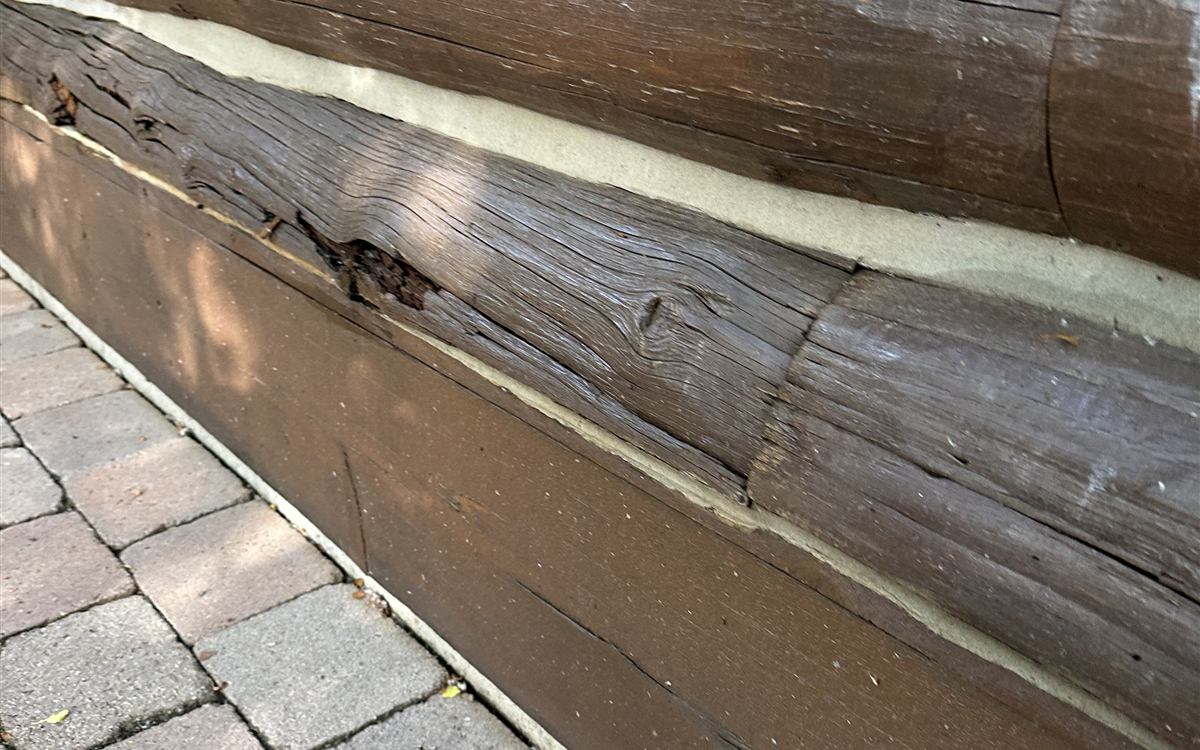
If water has been getting behind failed chinking for years, there may be soft or rotted wood that needs attention before new chinking goes on. At that point you're into log home restoration territory — and sealing over rot is throwing money away.
Rule of thumb: if you can see gaps, cracks, or chinking pulling off the log line, get it assessed before winter. A spot repair caught early costs a fraction of the re-chink-plus-wood-repair job it becomes after a few more freeze-thaw cycles.
Spot repair vs. full re-chink
Most homeowners assume they need the whole home re-done. Often they don't. Chinking fails wall by wall — south- and west-facing walls take the most sun and movement and fail first, while shaded walls may have years of life left. A good assessment walks every joint and tells you which walls need work now, which can wait, and which are fine. That difference alone can cut a quote dramatically.
The time a full re-chink makes sense: when the original material was low quality, when the same failure pattern shows on every exposure, or when the home is getting a full re-stain anyway and it's efficient to do both while the staging is up.
Why Idaho is harder on chinking than most places
Chinking is an elastic joint (here's a fuller explanation of what chinking is) — it's designed to stretch and compress as logs shrink and swell. At our elevation, logs go through intense UV, dry summers, and hard freeze-thaw winters, which means more movement per year than in milder climates. Quality chinking installed over proper backer rod handles this for 15–20 years. Bargain material, or good material installed over bad prep, shows cracks in two or three seasons. In this climate, the cheap job is the expensive one.
Getting a real number for your home
No article can price your home — the linear footage, joint condition, and access are different on every build. What we can promise is how we quote: we walk the whole home, check every joint for adhesion and cracking, and price only the work the logs actually need. If 80% of your chinking is sound, you'll hear that.
Chase Construction re-chinks and re-stains log homes across Sun Valley, Ketchum, Hailey, and Bellevue. Read more about our log home chinking and staining service, or call 208-897-8100 for an assessment.