
Log Home Chinking
& Staining in Idaho
The chinking and stain are the two things standing between your logs and an Idaho winter. When they fail, the wood pays for it. We re-chink and re-stain log homes across Sun Valley — the right way, so it lasts.
The two things that
keep water out of your logs.
Chase Construction re-chinks and re-stains log homes across Sun Valley, Ketchum, and Hailey. If your chinking is cracking, pulling away from the logs, or letting drafts through — or if your stain has gone gray, chalky, or blotchy — that's the wood telling you its weather barrier has run out. We restore it before the logs take damage they can't recover from.
New to the term? Start with what chinking is and how it differs from caulk. Log home chinking and log home staining are maintenance, not construction. But done wrong, they fail fast and take the logs with them. We treat them as the protective systems they are.
Assess the logs.
Then match the fix.
Not every wall needs the same thing. A south face bakes in the sun and fails first; a shaded north wall may have years left. We walk the whole home and tell you what actually needs attention — not a blanket re-do that bills you for work the logs don't need.
Chinking Assessment
We check every joint for adhesion, cracking, and gaps. Where chinking has failed, we identify why — movement, prior product, or moisture — so the repair doesn't fail the same way again.
Stain & Sealant Condition
We read the current finish: is it worn thin, chalking, or failing to bead water? We match new stain to the log species and to the existing color so repaired areas blend into the original finish instead of standing out.
Maintenance Schedule
In Sun Valley's high-UV, freeze-thaw climate, most log homes want a stain inspection every 3–5 years and re-treatment every 5–8. We'll tell you where yours sits and set a schedule that protects the logs before problems start.
Log home staining,
matched to the exposure.
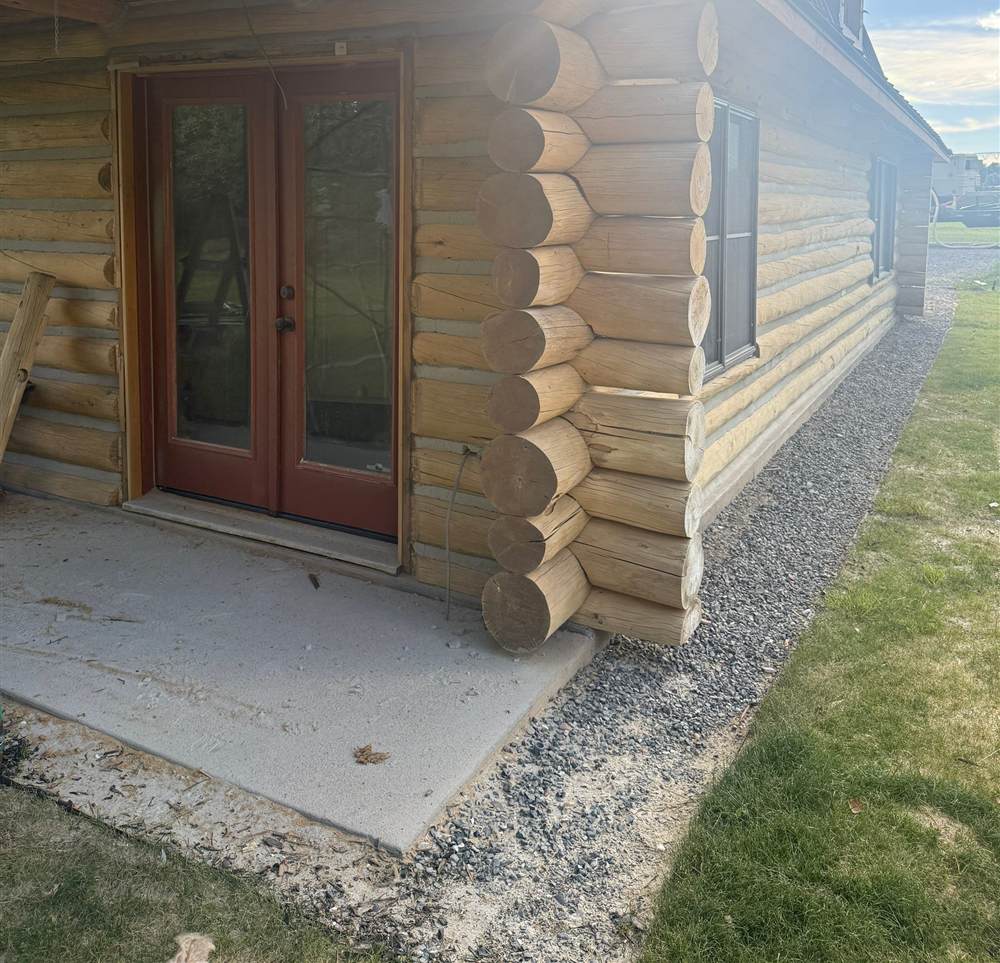
At this elevation, Idaho sun is the hardest thing your logs face. Stain is their sunscreen and their raincoat at once — UV protection and moisture resistance in one film. When it goes gray, chalky, or stops beading water, the wood underneath starts absorbing every storm and every freeze.
When a log home needs re-staining
Graying or blotchy color, a chalky residue when you rub the wood, and water soaking in flat instead of beading — those are the signs. In the Wood River Valley, south- and west-facing walls fail years before the rest of the home.
How we re-stain
We clean or strip the weathered finish back to sound wood, then apply stain matched to your log species, the existing color, and each wall's sun exposure — back-brushed so it penetrates instead of sitting on the surface. One home, one finish, no patchwork.
Choosing a stain that survives Idaho
Not every stain survives at 6,000 feet. High-altitude UV destroys cheap film-forming finishes — and once the film cracks, moisture gets trapped behind it and the failure accelerates. We use penetrating, log-rated stain systems with UV inhibitors, chosen for your log species and each wall's exposure. And if a previous product limits what can go over it, we'll tell you before a drop is applied.
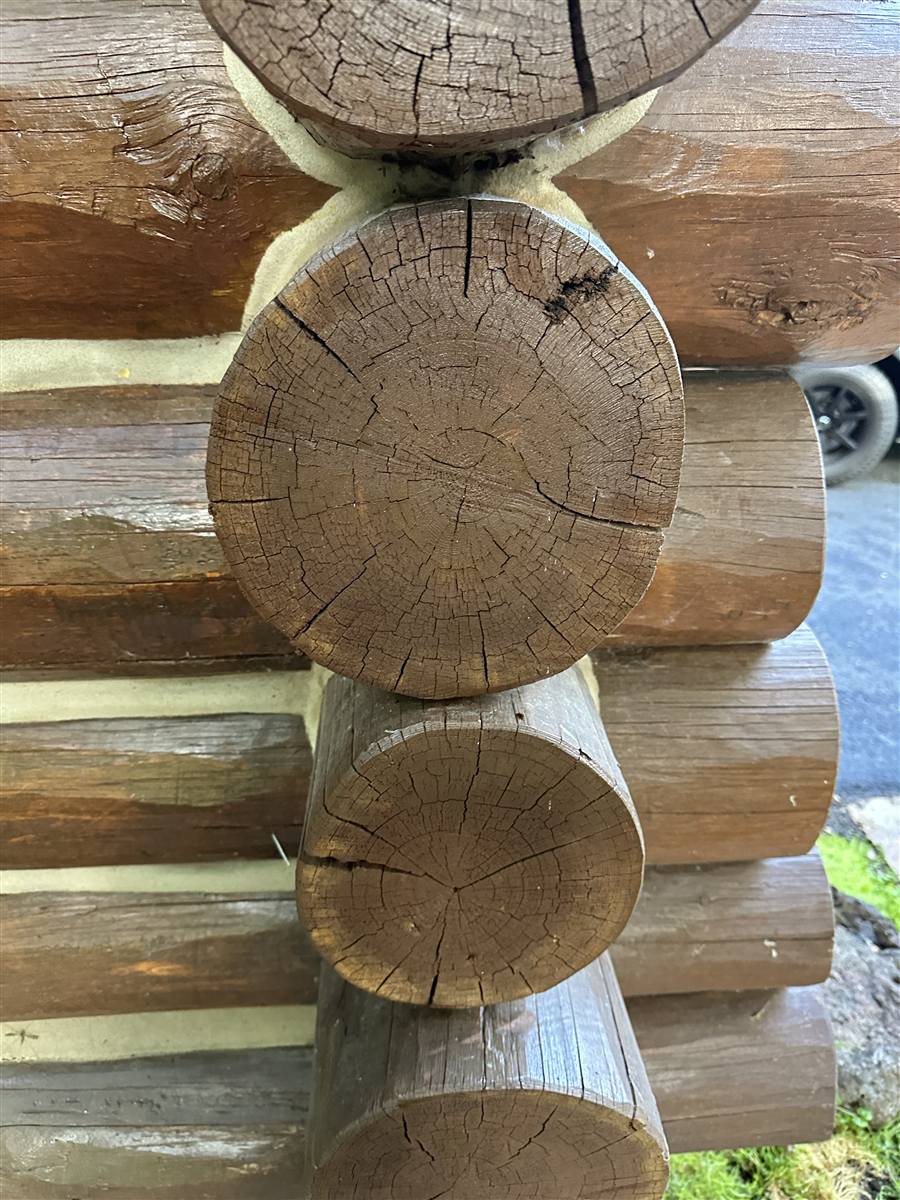
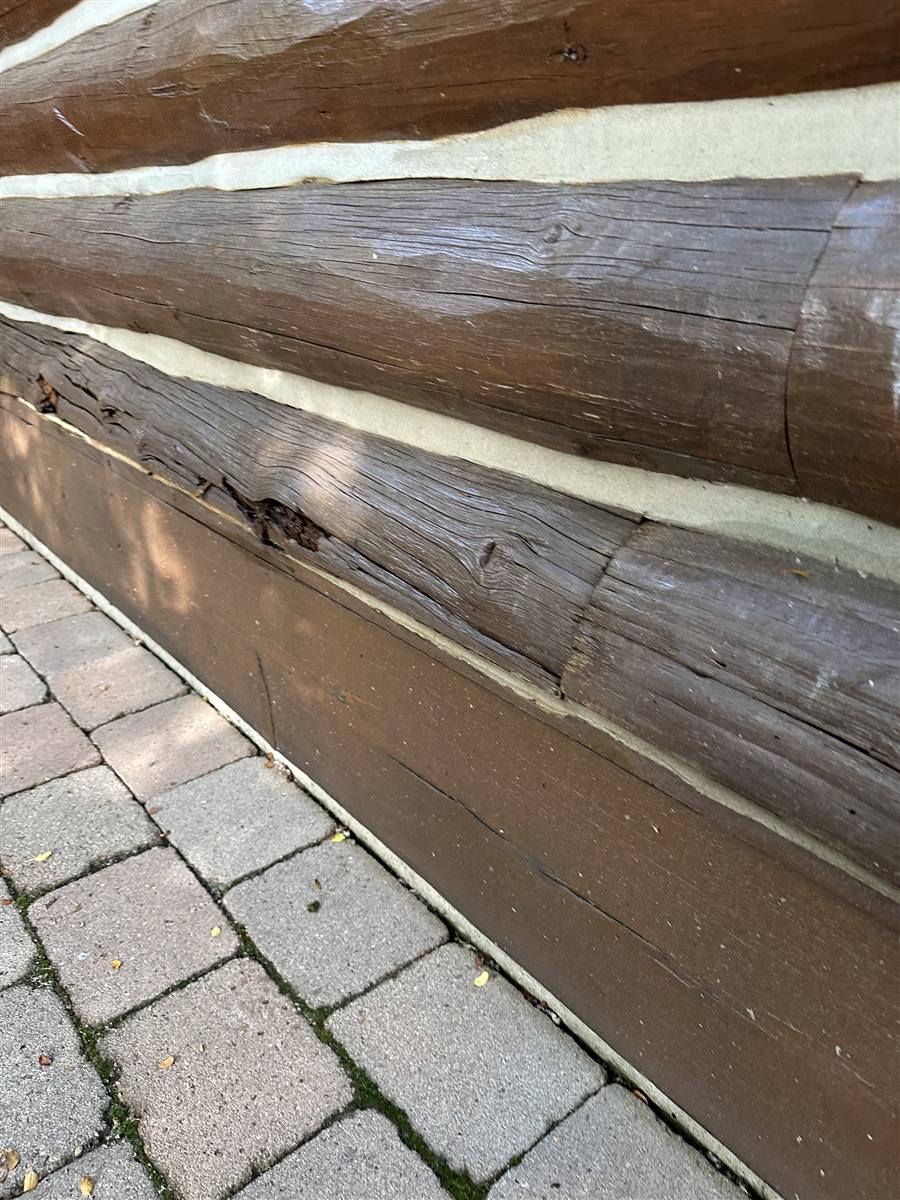
Chinking and stain on our recent log home maintenance work — real joints, not stock photos.
We know how logs
weather in this valley.
Chase Construction has maintained and restored log homes across Sun Valley for over two decades. Chinking and staining aren't add-ons for us — they're the routine care that keeps the log homes we build and restore standing. We know which products hold up to Idaho sun and snow, and which ones look good for a season and then fail.
If your log home's chinking is cracking or the stain has gone gray, contact us. We'll assess it and give you a straight answer on what it needs — and what it doesn't.
- Re-chinking of failed and cracking log joints
- Staining, re-staining, and sealant reapplication
- Species- and exposure-matched product selection
- Sun Valley, Ketchum, Hailey, and surrounding area
- Honest assessment before any work begins
Bigger problems than a finish? If logs are checking, settling, or showing rot, that's log home restoration — and we handle that too.
Chinking & staining,
answered.
How often should a log home be re-chinked?
Quality chinking can last 15–20 years, but Sun Valley's freeze-thaw cycles are hard on it. Rather than a fixed schedule, we recommend a chinking inspection every few years — the moment you see cracking, gaps, or chinking pulling away from the logs, it's time to address it before water gets behind it.
How often does a log home need staining in Idaho?
In our climate — high UV, snowload, freeze-thaw — most log homes benefit from a stain inspection every 3–5 years and a full re-treatment every 5–8, depending on the original product and sun exposure. South- and west-facing walls almost always need it first.
Can you match new stain to the rest of my log home?
Yes. For spot work and re-staining, we match the existing color and sheen so repaired areas integrate with the original finish rather than standing out. For a full re-stain, we'll work with you on whether to hold the current look or shift it.
Do you do chinking and staining if you didn't build the home?
Absolutely. Much of our maintenance work is on homes we didn't build. We assess the logs, the existing chinking, and the current finish, and treat the home on its own terms.
How much does log home chinking cost in Idaho?
Chinking is priced by the linear foot, so the honest answer depends on how much has failed, how wide the joints are, wall height and access, and how much prep the old material needs. Spot repairs cost a fraction of a full re-chink — which is why we assess first and quote only the work the logs actually need. We break down every cost driver in our guide to log home chinking cost in Idaho.
How much does log home staining cost in Idaho?
Staining is usually priced by wall surface area, and the biggest variable is prep — a clean-and-recoat on a sound finish costs far less than stripping a failed product back to bare wood. Wall height, access, and coat count matter too. We assess the existing finish first and tell you whether your home needs a maintenance coat or a full re-stain.
What's the difference between chinking and caulking?
Chinking is a wide, textured, highly elastic sealant made for the big joints between logs — it stretches and compresses as the logs move through freeze-thaw. Caulk is for narrow, stable gaps like trim and window lines. Filling log joints with regular caulk is a common shortcut that cracks out within a couple of seasons; we see it — and fix it — often.
Get a chinking &
staining assessment.
We walk the property, read the logs, and tell you exactly what your chinking and stain need before any work begins.
Request an Assessment