
A log home isn't fragile — some of the homes we work on have stood for a century. But it is honest: it shows you exactly how it's been treated. Maintained on a rhythm, a log home asks for surprisingly little. Ignored for five years, it hands you a restoration bill. This guide covers the whole system — what to watch, when to act, and what it costs — from a crew that builds, restores, and maintains log homes across the Wood River Valley.
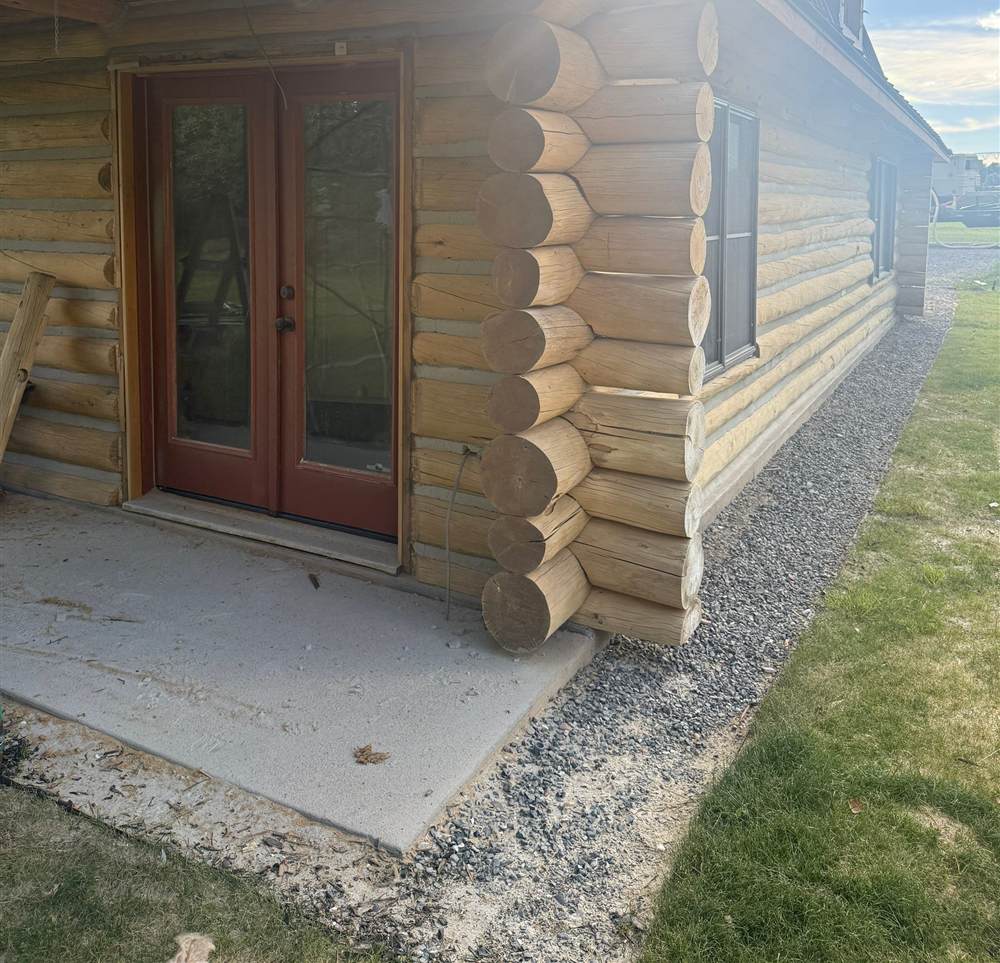
The four systems that keep a log home sound
1. The stain
Stain is the wall's sunscreen and raincoat in one. It blocks UV, which grays and breaks down wood fiber, and sheds the water that would otherwise soak in. Stain fails gradually and invisibly until it fails obviously — which is why the water-flick test matters: flick water at your sunniest wall, and if it soaks in instead of beading, the protection is gone. Our guide to the signs your log home needs re-staining covers all four failure signals. In Idaho's high-UV, freeze-thaw climate, expect to re-coat exposed walls every 3–5 years; shaded walls last longer.
2. The chinking and sealants
The elastic joints between logs keep weather out of a wall that moves with every season. If you're new to log homes, start with what chinking actually is — then walk your joint lines once a year looking for cracks, peeling, and gaps. Spot repairs caught early are cheap; failures left through a winter compound. The chinking cost guide explains how pricing works when you do need work done.
3. Water management
Almost every rotted log we replace traces back to water landing where it shouldn't: overflowing gutters, downspouts dumping at the foundation, sprinklers hitting log walls, snow piled against bottom courses, or decks splashing rain back onto the wall. The wood-and-finish systems above can only handle the weather they were designed for. Keep gutters clear, aim irrigation away from the walls, and keep the bottom two log courses out of standing snow.
4. The wood itself
Once a year, probe the vulnerable spots with a screwdriver: bottom courses, corners, log ends under rooflines, and anywhere with dark staining. Sound wood pushes back. Soft, spongy wood means water has been winning for a while — caught early, a single log can be repaired or replaced; caught late, it becomes a restoration project. Carpenter ants and other insects follow moisture, so an insect trail is a moisture clue too.
The maintenance calendar
Spring
- Wash the walls — a gentle rinse takes off winter grime and pollen before it feeds mildew.
- Inspect the splashback zone for winter damage: soft spots, dark staining, lifted finish.
- Water-flick test on the south and west walls.
- Check chinking lines after the freeze-thaw season — winter is when failures open up.
Fall
- Run the full pre-winter inspection — we published the complete fall checklist for Idaho winters as its own guide.
- Book any chinking or stain repairs while the weather still allows curing.
- Clear gutters and confirm downspouts discharge away from the foundation.
The whole system in one sentence: keep UV off the wood, keep the joints sealed, keep water moving away from the walls, and check the vulnerable wood once a year — everything else in log home care is a variation on those four moves.
What log cabin maintenance costs
The honest math: an annual inspection plus the occasional spot repair runs a small fraction of one percent of the home's value per year. A full re-stain cycle every 3–5 years is the biggest recurring line item. What breaks budgets is skipping the cycle — five unmaintained years can turn a re-stain into media blasting, log repairs, re-chinking, and refinishing all at once. In this climate, maintenance isn't an expense competing with restoration; it's the thing that makes restoration unnecessary.
What to do yourself vs. when to call
Homeowners can handle the watching: the annual walk-around, the water test, gutter clearing, and the screwdriver probe. The doing — staining, chinking, log repair — rewards professional work, mostly because of prep. Nearly every premature failure we see traces to shortcut preparation: stain over failed stain, chinking over bad backer rod, finish over wood that needed attention first.
If your home is in the Wood River Valley and you'd rather have the builder's eye on it, our chinking and staining crew runs assessments year-round — and for out-of-state owners we do the seasonal walk-throughs and send you the photos. Call 208-897-8100 to get on the schedule.